
Dt Swiss
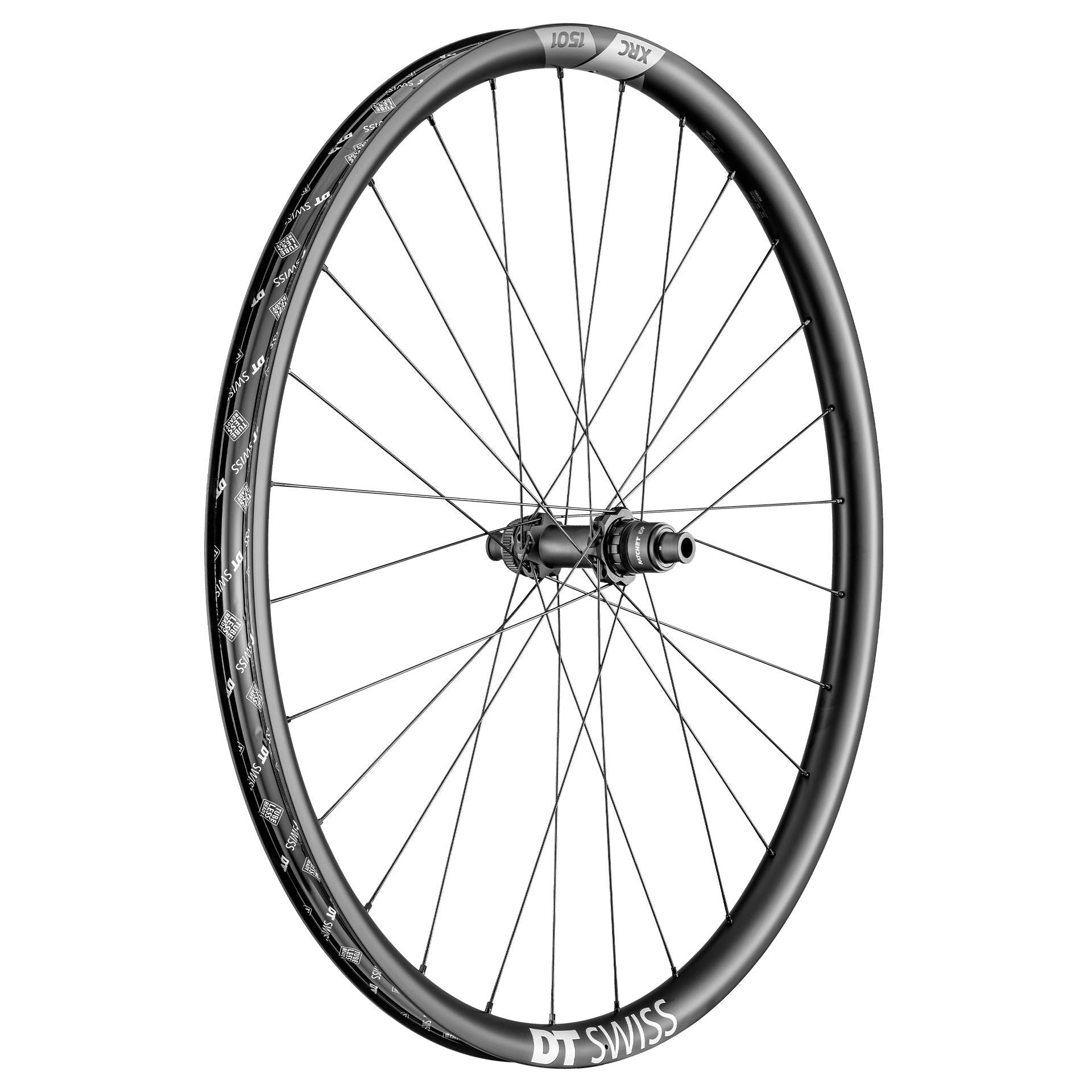
DT Swiss XRC 1501 Spline One 30 Carbon 29" Boost Tubeless Ready rear wheel
DT Swiss XRC 1501 Spline One 30 Carbon 29" Boost Tubeless Ready rear wheel
Biciscout.it CASALECCHIO DI RENO
Via Bazzanese 52
Piano Terra
40033 Casalecchio di Reno BO
Italy
Choose options
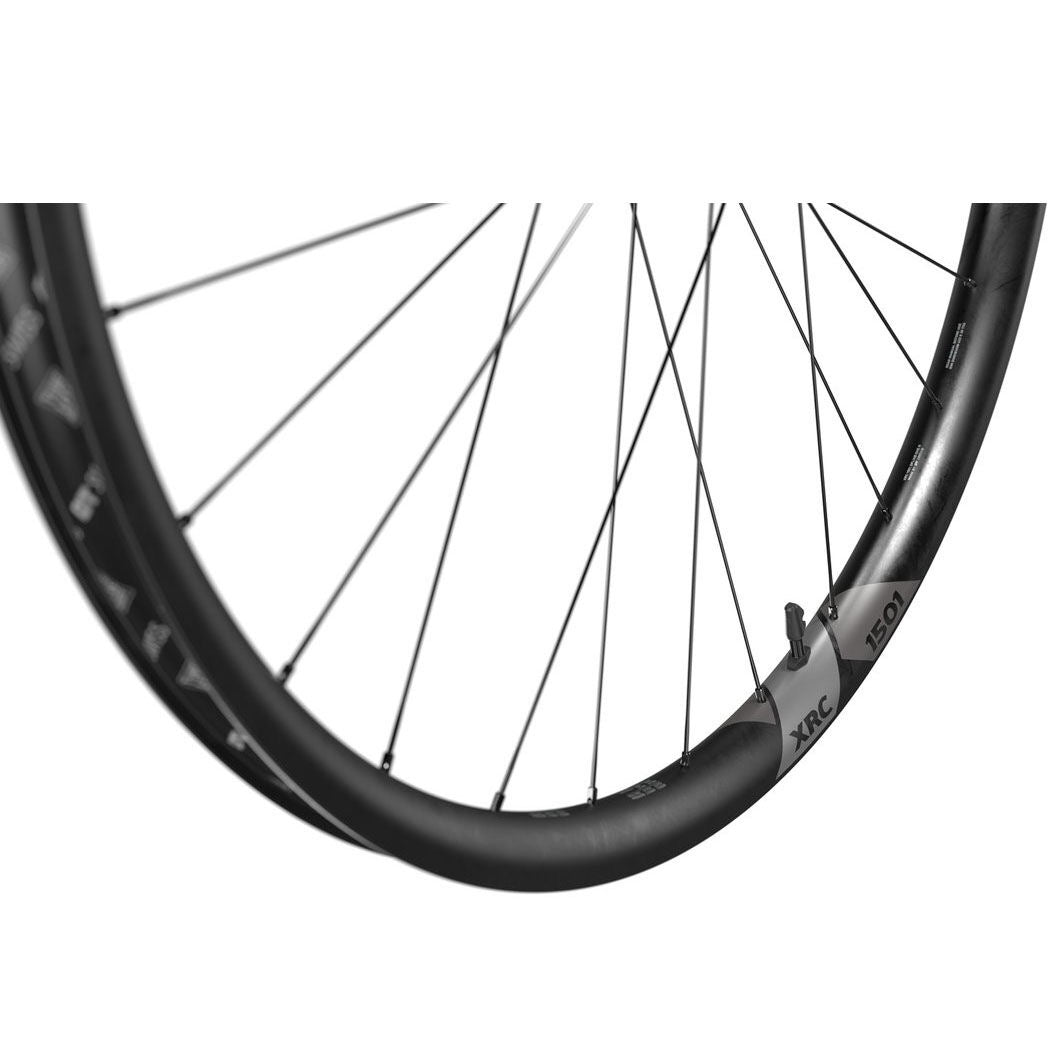
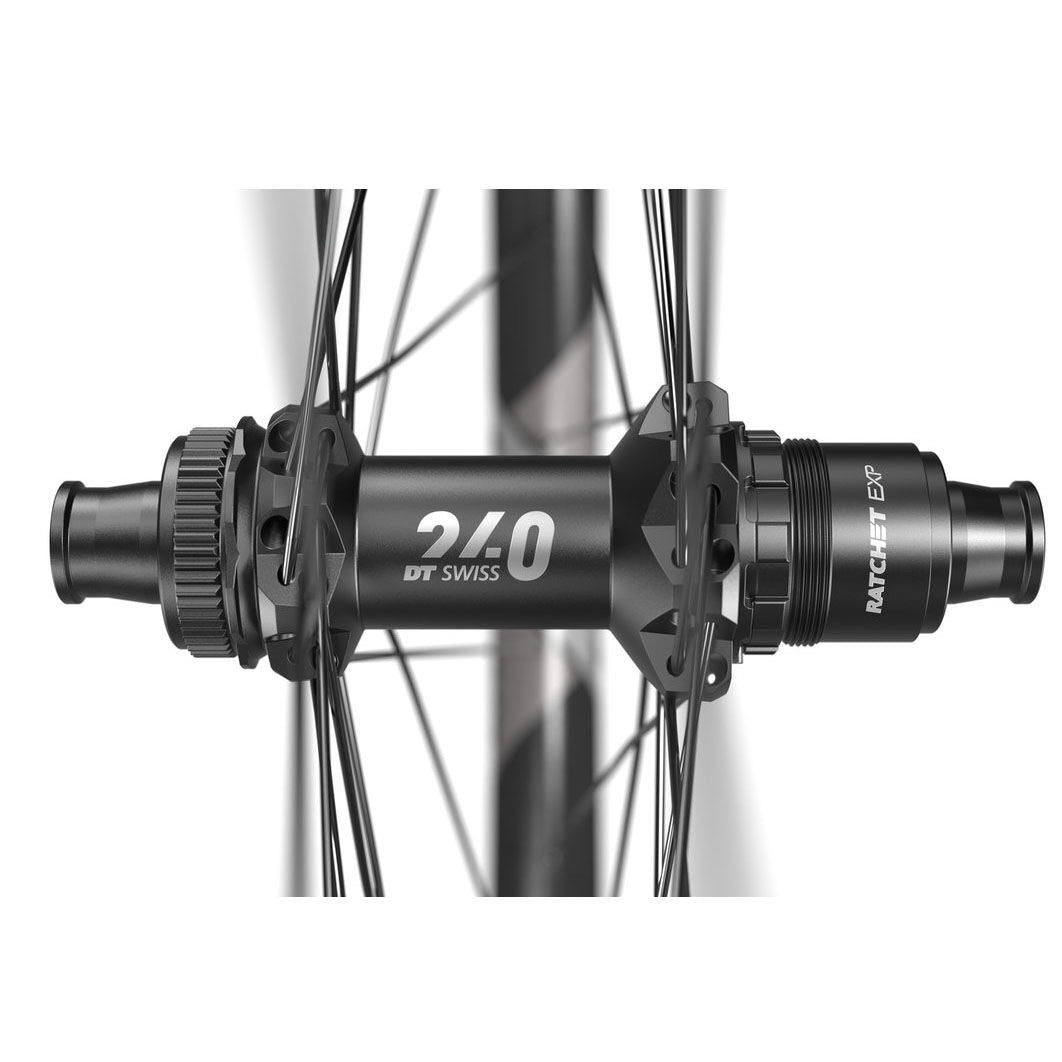
Tailored to the needs of cross-country professionals, the XRC 1501 Spline One leaves nothing to be desired. The lightweight, 30mm-wide carbon rims offer ideal support for modern cross-country tires. Rolling on race-proven, super-strong 240 hubs with the Ratchet Exp system, every ounce of energy is transferred forward through equally aggressive spokes and a perfect wheel construction.
Why Wide?
A wider rim provides better tire support which allows for lower pressure and leads to less rolling resistance on rough trails.
Cross Country wheels are designed for speed, which means reducing drag wherever possible. On rough surfaces, rolling resistance can be up to 69% of total resistance.
Rolling resistance is defined as: rolling resistance coefficient x weight x gravitational acceleration. The coefficient is determined by the wheel size, tire cross-section, tire characteristics, tire pressure, tread pattern, and terrain.
While most of these factors cannot be influenced by the wheel, we can modify the tire mount.
A wider rim provides better tire support which allows for lower pressure and leads to less rolling resistance on rough trails.
When cornering, lateral forces act on the tire. The tire's contact patch moves in the opposite direction to the lateral force.
When cornering with a narrow rim, the tire's contact patch is no longer above the narrow rim flange. The tire is no longer supported by the rim and flexes, resulting in unstable handling. This flex creates tension on the tire, which pulls on the opposite bead and causes air to leak between the tire bead and the rim bed, a condition known as tire burp.
The contact patch of a wide rim's tire is located inside the rim flanges. The tire's sidewall is supported by the wide rim, increasing control. A wider rim can therefore be mounted with lower air pressure than a narrower rim.
A wheel with low tire pressure will roll better on rough surfaces than one with high pressure, as the tire can adapt better to the terrain. A wheel with high air pressure cannot absorb obstacles, and the bike must move upward, comparable to lifting, which increases rolling resistance. Lower air pressure leads to less fatigue, because the cyclist also has less lifting to do.
Characteristics
- Rim: Clincher.
- Internal width: 30 mm.
- External width: 36 mm.
- Maximum weight: 110 kg.
- Hub: DT Swiss 240.
- Hub size: 148mm Boost.
- Body: Sram XD MTB (ASRAM)
- Freewheel technology: Ratchet EXP 36
- Nipples: DT ProLock Squorx ProHead alu
- Spokes: DT competition® race straight
- Spoke pattern: 3-cross (1:1).
- Actual weight: 828 g.
- ASTM Classification: 3.
Technologies
Tubeless
The Tubeless Ready rims in the DT Swiss range offer additional advantages over traditional rims. Their cross-section design allows the tire to seat more easily during inflation, even with a standard floor pump. The sophisticated profile of DT Swiss rims also ensures a precise and secure tire fit, even during aggressive riding.
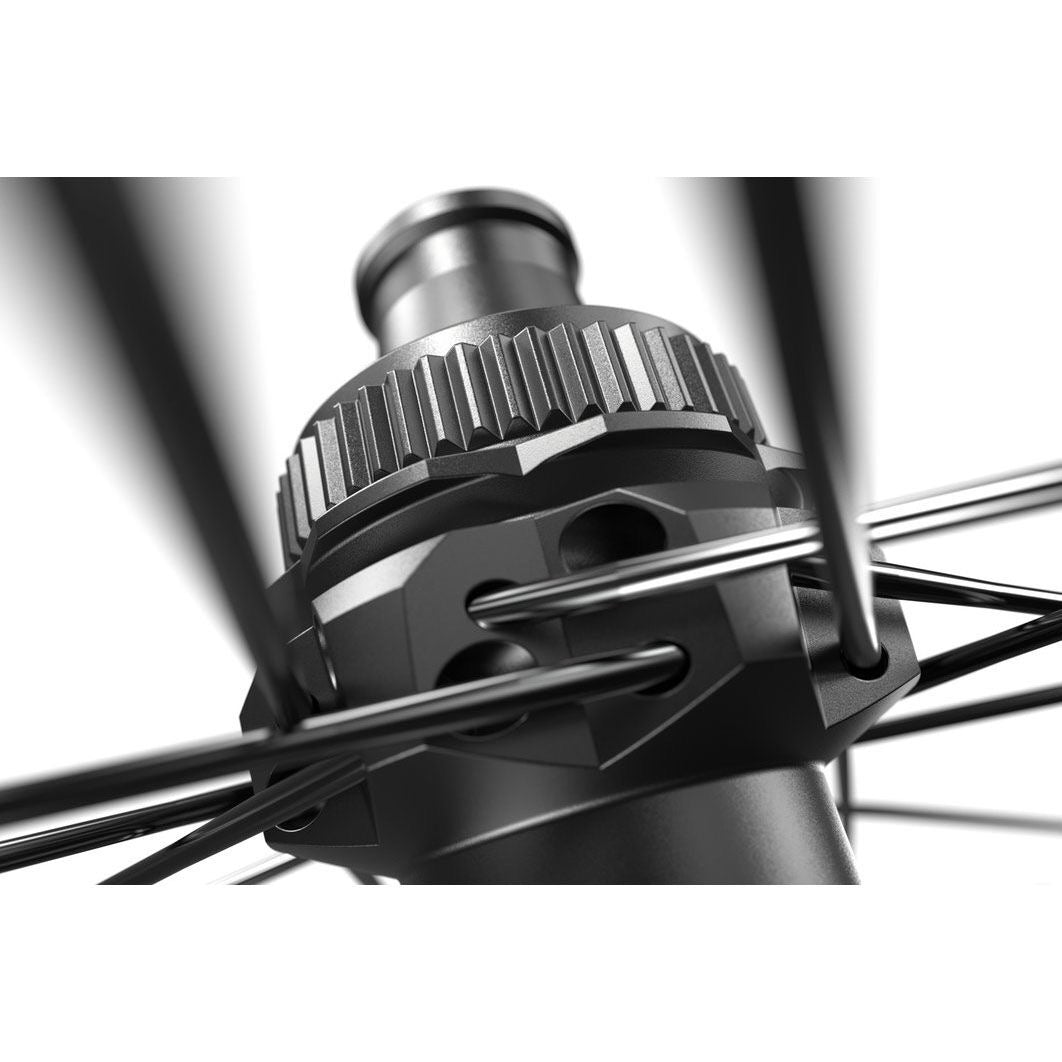
Ratchet EXP
- Easy maintenance: DT Swiss hubs are also known for their NoTool technology. DT Swiss has also found a way to further improve this system and make maintenance even easier, with a small modification to the end caps.
- Freehub Body Conversion: Simplified with easier disassembly.
- Reduced weight: Not only is reliability improved, but the fusion of the ratchet and threaded ring reduces the number of individual parts in the system, which offers a significant advantage.
- Less wear: A single cylindrical spring ensures faster and more complete engagement and therefore increases reliability
- Superior Reliability: The full engagement of the ratchets creates a large contact surface and therefore low surface pressure leading to superior reliability.
- Extended bearing life: Integrating the bearing into the threaded ring maximizes bearing clearance. The increased clearance further supports the axle, resulting in less axle deflection, protecting the bearings and increasing their lifespan.
Prolock
Pro Lock® is a process in which a patented, dual-compound liquid adhesive is injected into the nipple thread, enabling the construction of extremely durable wheels. When the nipple is inserted over the spoke, the adhesive activates and begins to harden. The wheel can still be rolled back after the adhesive has fully cured, with only a minimal reduction in its thread-locking ability.
Hook angle
A hotly debated topic in the market right now: engagement angle! What is engagement angle, how does it affect handling, and is the conventional wisdom "more is better" really always better?
The engagement angle is the maximum degree the freewheel body can rotate until the freewheel teeth engage and accelerate the hub. This angle is calculated by dividing 360º by the number of freewheel engagement points.
DT Swiss still believes today that a system with 36 attachment points represents the best optimization within this three-dimensional perspective in terms of reliability, weight and attachment points.